Losing a tooth — or several — changes more than your smile. It affects how you chew, how you speak, and often how confident you feel. The good news is that modern implant dentistry can replace anything from one missing tooth to an entire arch. The question most patients ask is simple: which option do I actually need?
As a Dental Implant Specialist in Lanark, we regularly help patients understand the differences between available implant solutions and choose the option that best fits their needs. Two treatments come up again and again in this conversation: the single dental implant and the All-on-4. They solve very different problems, and choosing between them isn’t really a matter of which is “better.” It’s about matching the treatment to your mouth, your bone, and your goals.
This guide explains both options in plain English, so you can walk into a consultation already understanding what’s likely to suit you.
What Is a Single Dental Implant?
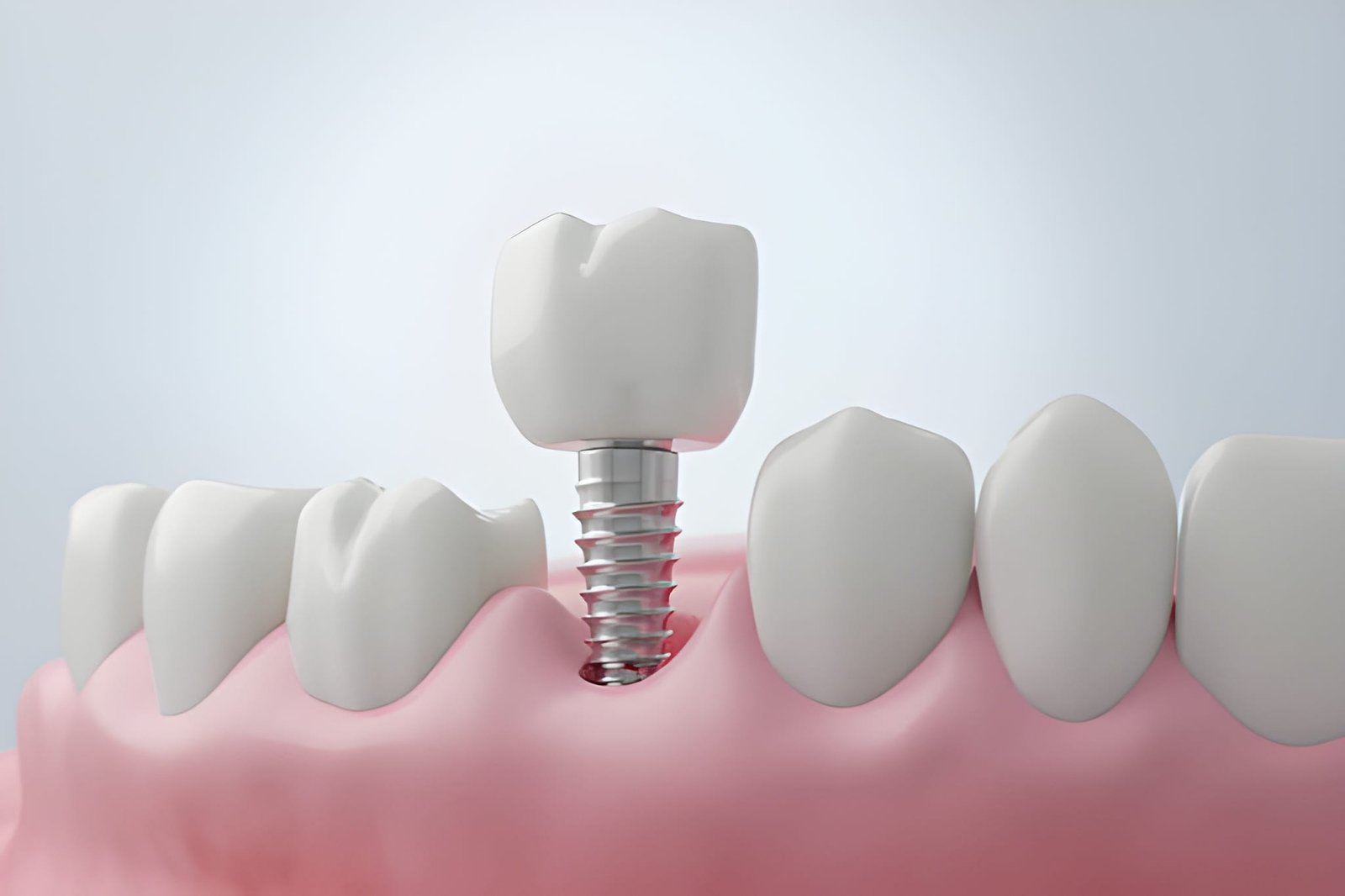
A single dental implant replaces one missing tooth from root to crown.
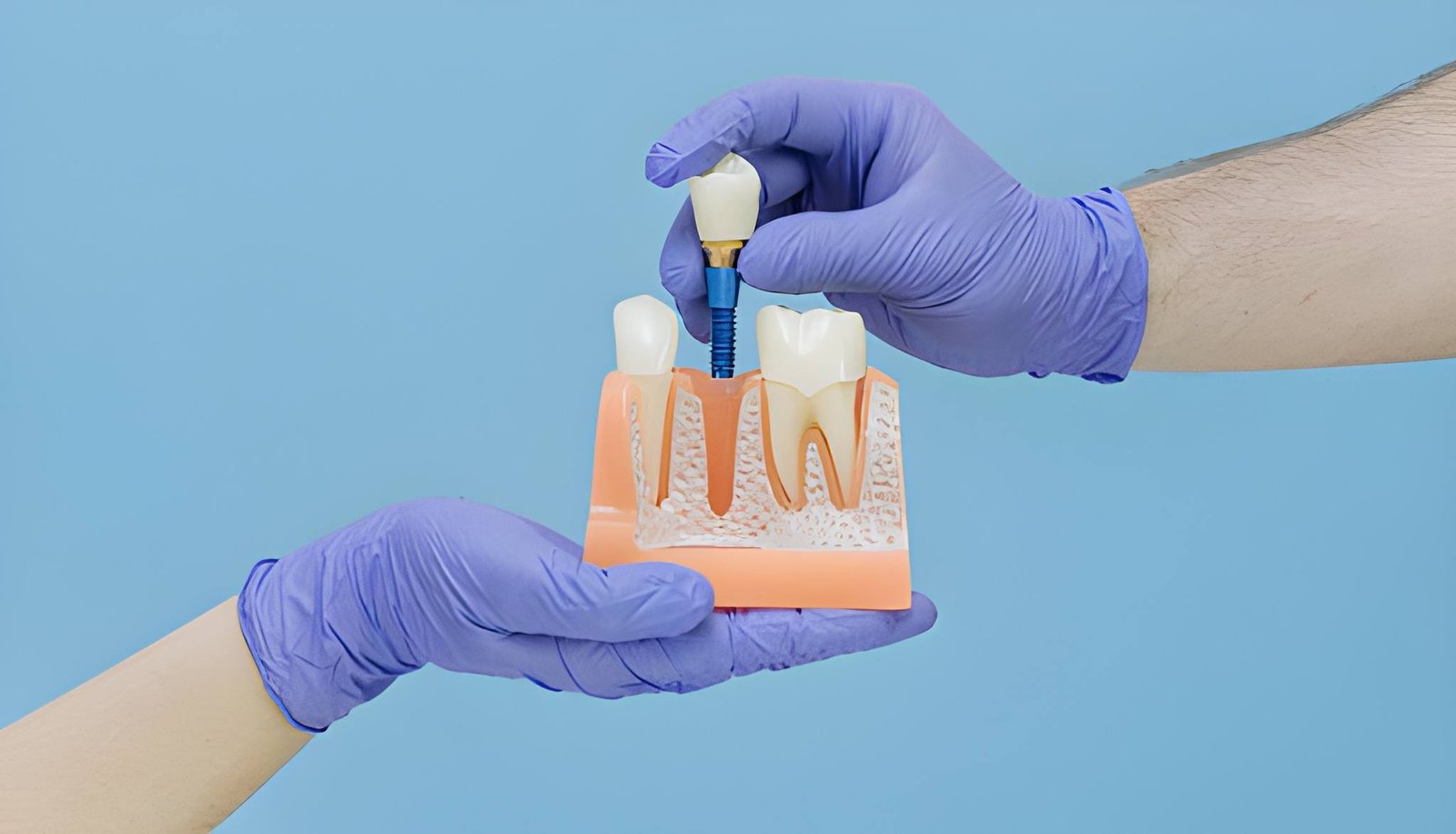
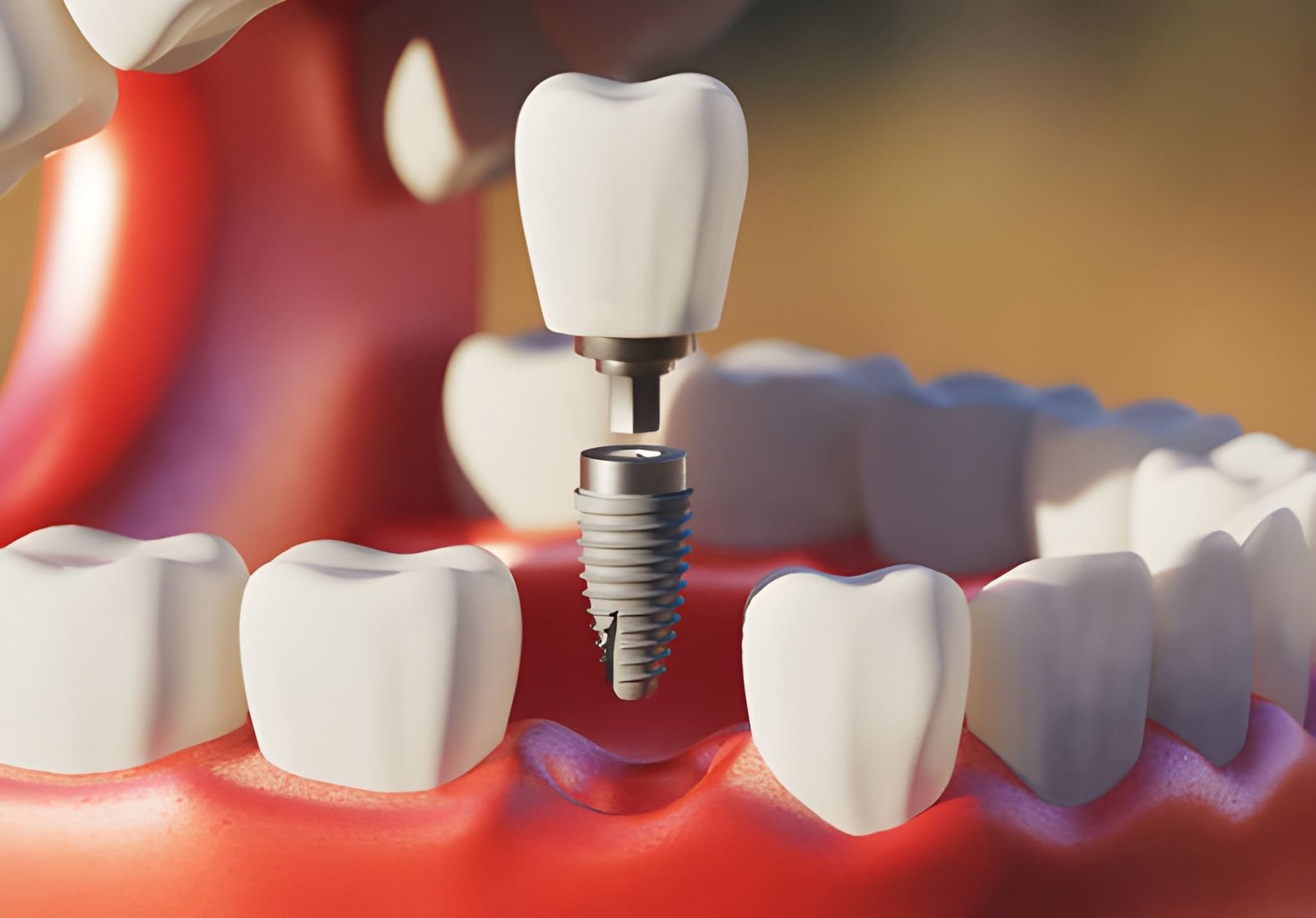
It has three parts. A small titanium post is placed into the jawbone, where it acts as an artificial root. Over a few months, the bone fuses around it in a natural process called osseointegration. Once it’s stable, a connector called an abutment is attached, and a custom-made implant crown is fixed on top. The result looks and functions like a natural tooth.
Single implants are usually ideal for patients who:
- Are missing one tooth (or a few teeth in separate locations)
- Have healthy neighbouring teeth worth preserving
- Have enough jawbone to support the implant, or are suitable for a graft
- Want to avoid filing down adjacent teeth, as a traditional bridge would require
The main benefit is how targeted it is. You replace only what’s missing and leave the rest of your natural dentition untouched. A single implant also helps with jawbone preservation, because the post stimulates the bone the way a real root would, slowing the bone loss that follows tooth extraction.
The limitation is straightforward: it’s designed for individual gaps. If you’re missing most or all of your teeth, placing an implant for each one becomes impractical and costly.
What Is All-on-4 Treatment?
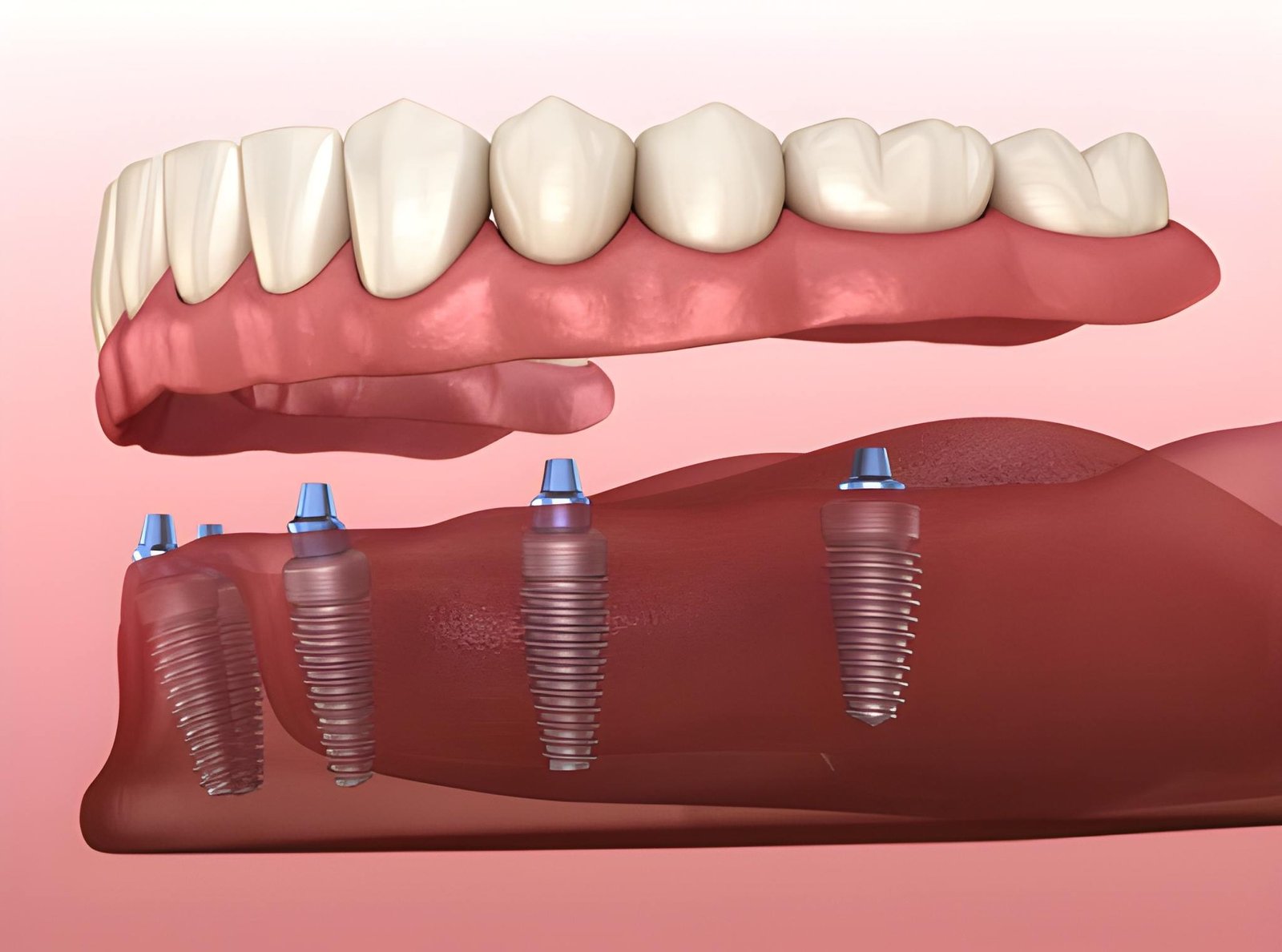
All-on-4 is a full arch restoration that replaces an entire upper or lower set of teeth using just four implants.
Rather than one implant per tooth, the technique uses four titanium posts positioned strategically across the jaw. Two are placed vertically at the front, where bone tends to stay dense, and two are angled toward the back to anchor into firmer bone and spread the biting force evenly. A fixed, full-arch bridge — typically 10 to 14 teeth — is then secured onto these four supports.
Because the angled placement makes the most of available bone, many patients can avoid bone grafting even when some bone loss has already occurred.
All-on-4 typically suits patients who:
- Have lost all or most of their teeth in an arch
- Have failing or heavily worn teeth that can’t be saved
- Are tired of loose, uncomfortable dentures
- Want a fixed, non-removable solution
The advantages are significant: a stable bite, a natural appearance, and teeth that stay put without adhesives. The upper version uses a horseshoe shape that leaves the roof of the mouth uncovered, which many patients find improves taste and speech compared with a conventional denture.
The trade-off is that it’s a more involved treatment, planned around the whole arch rather than a single gap — and it isn’t the right choice for someone simply missing one tooth.
Single Implant vs All-on-4: Key Differences
Here’s how the two compare across the factors patients care about most.
| Factor | Single Dental Implant | All-on-4 |
|---|---|---|
| Teeth replaced | One (or isolated single gaps) | A full arch (10–14 teeth) |
| Number of implants | One per tooth | Four per arch |
| Best for | Localised tooth loss | Extensive or complete tooth loss |
| Complexity | Lower | Higher, full-arch planning |
| Recovery | Generally quicker, localised | Longer healing across the arch |
| Maintenance | Brushed and flossed like a natural tooth | Specialist hygiene around a fixed bridge |
| Longevity | Excellent with good care | Excellent with good care |
| Relative cost | Lower per tooth | Higher overall, fewer implants per arch |
Both options are built to last for many years when properly maintained. The real difference comes down to how much you need replaced and the condition of the teeth you still have.
When Is a Single Dental Implant the Better Option?
A single implant is usually the right call when the problem is contained.
If you’ve lost one tooth — through injury, decay, or a failed previous treatment — and the teeth on either side are healthy, a single implant restores the gap without disturbing them. This matters because preserving your natural dentition is almost always preferable to involving healthy teeth in treatment.
It’s also the sensible choice when you have a few separate gaps in different parts of the mouth, where each missing tooth can be addressed individually. The aim here is precision: fix what’s broken, protect what isn’t.
When Is All-on-4 the Better Option?
All-on-4 comes into its own when tooth loss is widespread or a whole arch is failing.
Consider it if you’re dealing with:
- Extensive tooth loss across an upper or lower jaw
- A failing dentition, where remaining teeth are loose, decayed, or beyond saving
- Severe wear or repeated dental problems affecting most teeth
- Multiple missing teeth clustered together
- Life as a denture wearer, where slipping, soreness, or poor function has become a daily frustration
In these situations, replacing teeth one by one isn’t practical. A full-arch solution restores the entire smile in a planned, structured way and gives back stable chewing function — often something denture wearers haven’t had in years.
How Much Do These Treatments Cost?
Cost is one of the first questions patients ask, and the honest answer is that it depends entirely on the individual.
As a general guide, a single dental implant is the lower-cost option because it involves one implant and one crown. All-on-4 is a larger investment overall, as it replaces an entire arch — though it’s often more economical than placing numerous separate implants to achieve the same result.
Your final treatment plan is shaped by factors such as your bone condition, whether any grafting is needed, the materials used, and how many arches are being treated. The only way to get an accurate figure is a personal assessment, where everything is costed against your specific needs rather than a one-size-fits-all price.
How Do Dentists Determine Which Option Is Right?
Choosing between a single implant and All-on-4 is never guesswork. It follows a clear assessment process.
It begins with an implant consultation, where your dentist discusses your concerns, medical history, and what you’d like to achieve. This is followed by a thorough oral examination to check the condition of your gums, remaining teeth, and bite.
The decisive step is imaging. A CBCT scan — a 3D X-ray — shows your jawbone in detail, revealing how much bone is available and where. Combined with digital scans of your mouth, this lets your dentist plan implant placement precisely and confirm whether you’ll need any preparatory treatment.
From there, your dentist builds a personalised treatment plan. Two patients missing the same number of teeth can still end up with different recommendations, because the answer depends on bone, oral health, and individual circumstances — not the number of gaps alone.
Implant Care at Waterloo Dental Practice in Lanark
Whether you’re weighing up a single tooth implant or a full arch restoration, having the right support locally makes the whole journey easier. Patients at Waterloo Dental Practice in Lanark can access:
- Implant consultations to discuss your options
- CBCT assessments for accurate, 3D treatment planning
- Single implant treatment planning
- Full arch implant assessments, including All-on-4 suitability
- Implant maintenance appointments
- Ongoing hygiene support
- Long-term implant reviews
We regularly welcome patients travelling from Lanark, Glasgow, Edinburgh, and across South Lanarkshire who want a considered, unhurried assessment of which implant solution genuinely fits their situation.
Frequently Asked Questions
Can a single implant ever replace more than one tooth?
A single implant replaces one tooth. However, where two or more adjacent teeth are missing, an implant-supported bridge can use a small number of implants to support several crowns — a middle-ground option your dentist may discuss.
Is All-on-4 the same as dentures?
No. Traditional dentures rest on the gums and are removable. An All-on-4 bridge is fixed permanently onto four implants and stays in place without adhesives, giving far greater stability.
Which option lasts longer?
Both single implants and All-on-4 restorations can last many years — often decades — when well maintained. Longevity depends more on oral hygiene, regular reviews, and individual health than on the treatment type itself.
Do I need enough jawbone for either treatment?
Healthy bone supports implant success. Single implants may sometimes require a graft if bone is limited, while All-on-4’s angled placement often makes the most of existing bone and can reduce the need for grafting. A CBCT scan confirms what’s possible.
How do I know which treatment I need?
The clearest way is a professional assessment. After an examination and 3D imaging, your dentist can tell you whether a single implant, All-on-4, or another solution best matches your needs.
Choosing the Right Path for You
There’s no universal “best” implant treatment — only the one that’s right for your mouth. A single dental implant excels at restoring an isolated gap while protecting your natural teeth. All-on-4 transforms a failing or fully missing arch into a stable, fixed smile. The deciding factors are your remaining teeth, your jawbone, and your personal goals, all confirmed through proper imaging and planning.
If you’re unsure where you fit, the next step is simply a conversation with a dentist who can assess your situation honestly and explain your options without pressure.
Book your implant consultation in Lanark — and get clear, personalised answers about whether a single implant or All-on-4 is the right choice for you.