Choosing between dental implants and dentures is one of the most significant decisions a person can make about their oral health. It affects how you eat, how you speak, how you feel about your smile — and your long-term jaw health in ways that aren’t always obvious at first.
Many patients across Lanark, Glasgow, Edinburgh, and South Lanarkshire begin their tooth replacement journey with dentures. They’re more familiar, typically covered or subsidised through NHS dentistry, and seem like the straightforward option. But over time, questions arise. The fit changes. Adhesives become a daily necessity. And some patients start wondering whether there’s a better long-term solution.
This article isn’t here to push you towards one option. It’s here to give you the honest, clear information you need to understand both — so that when you do speak to a dentist, you’re already asking the right questions.
What Are Dentures?
Dentures are removable dental prosthetics designed to replace missing teeth. They sit over the gum line and, in the case of full dentures, are held in place by suction, the natural contours of the mouth, or dental adhesive. Partial dentures use metal clasps or precision attachments to anchor onto remaining natural teeth.
There are two main types:
- Full (complete) dentures — used when all teeth are missing in the upper or lower arch, or both
- Partial dentures — used when some natural teeth remain
Dentures have been a reliable tooth replacement solution for generations, and for the right patient, they remain a perfectly valid option. They’re non-surgical, relatively quick to fit, and can be adjusted if your mouth changes shape over time.
That said, they do have real limitations — particularly for patients who want a permanent, stable solution.
What Are Dental Implants?
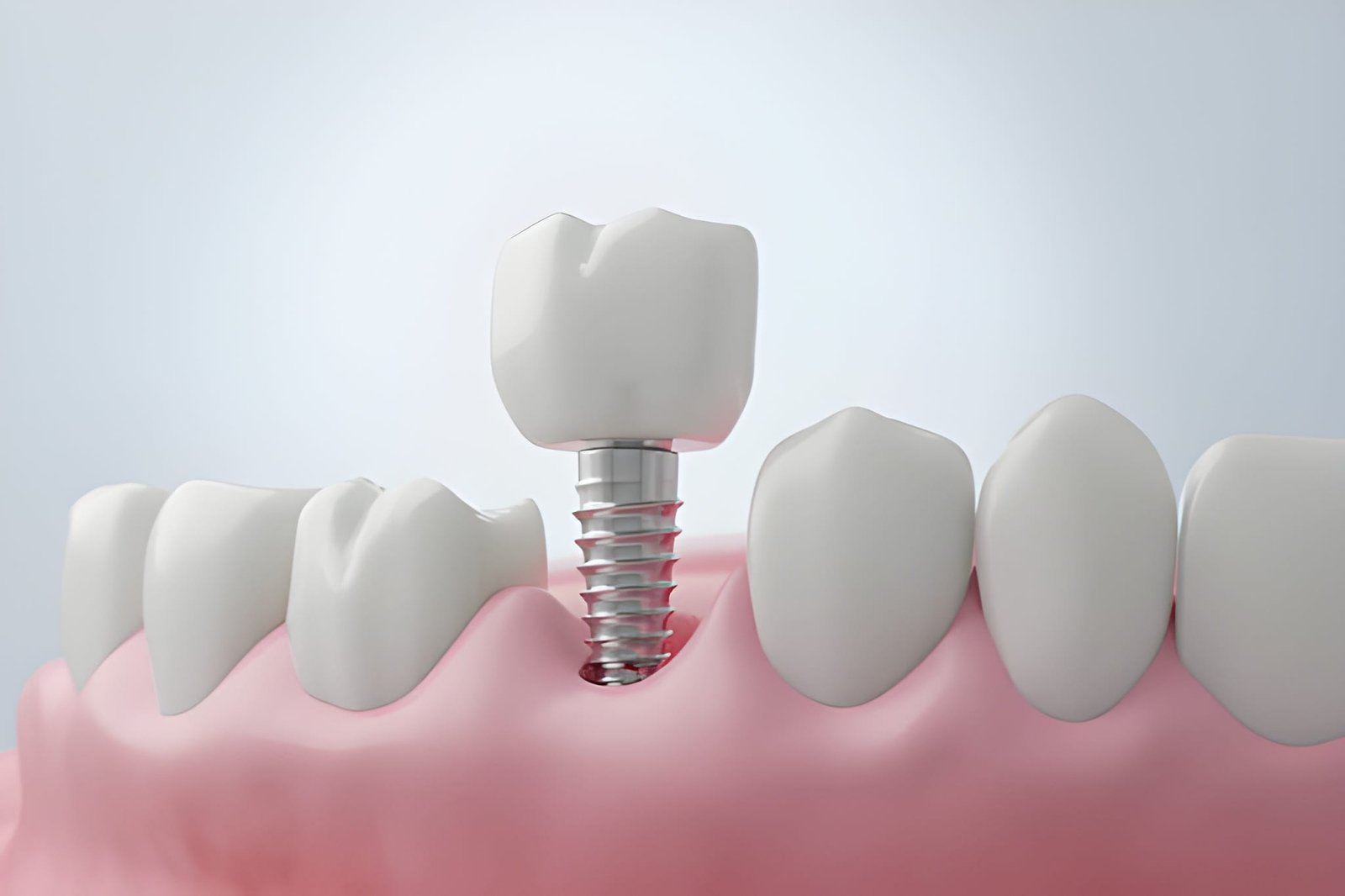
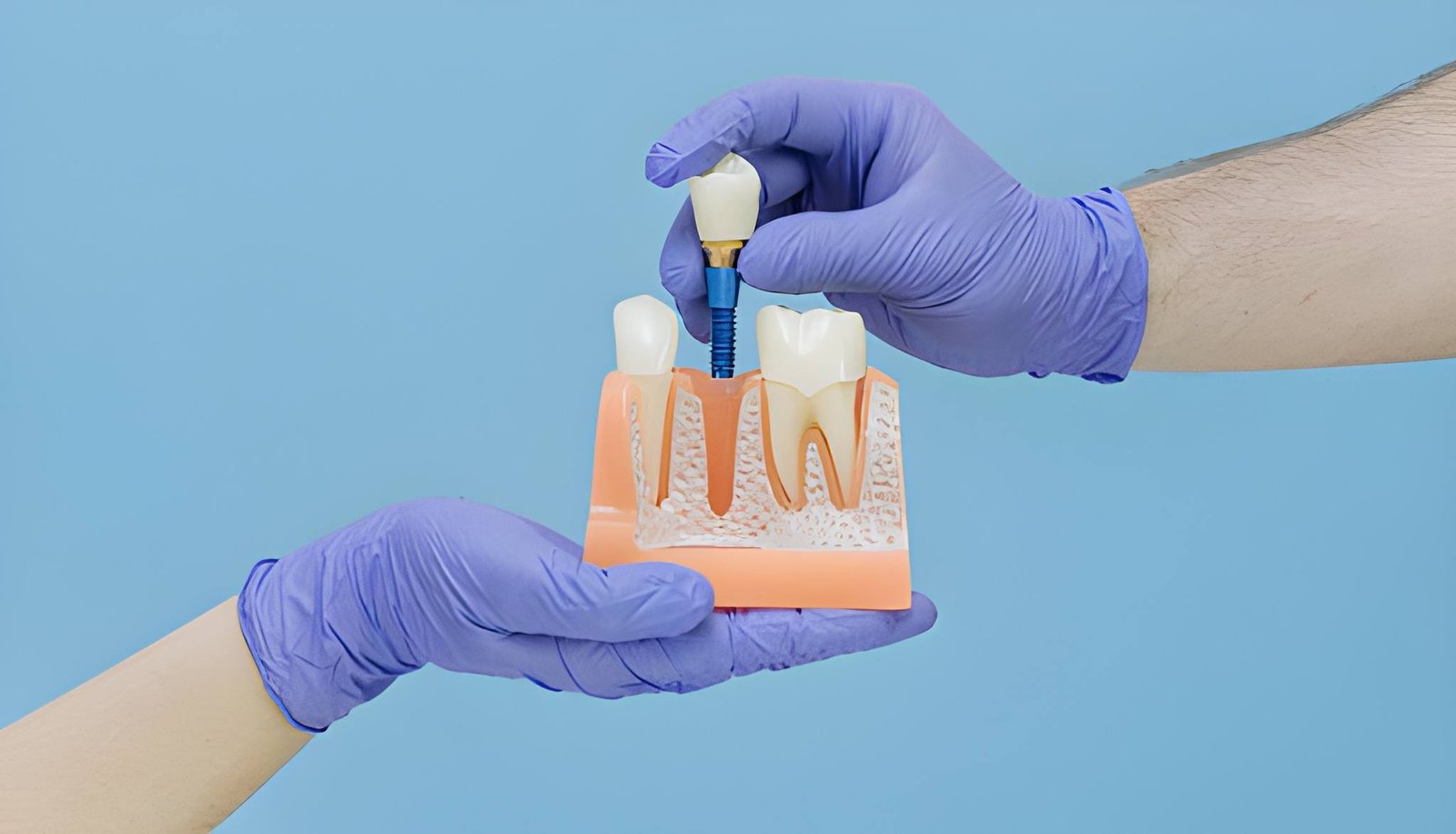
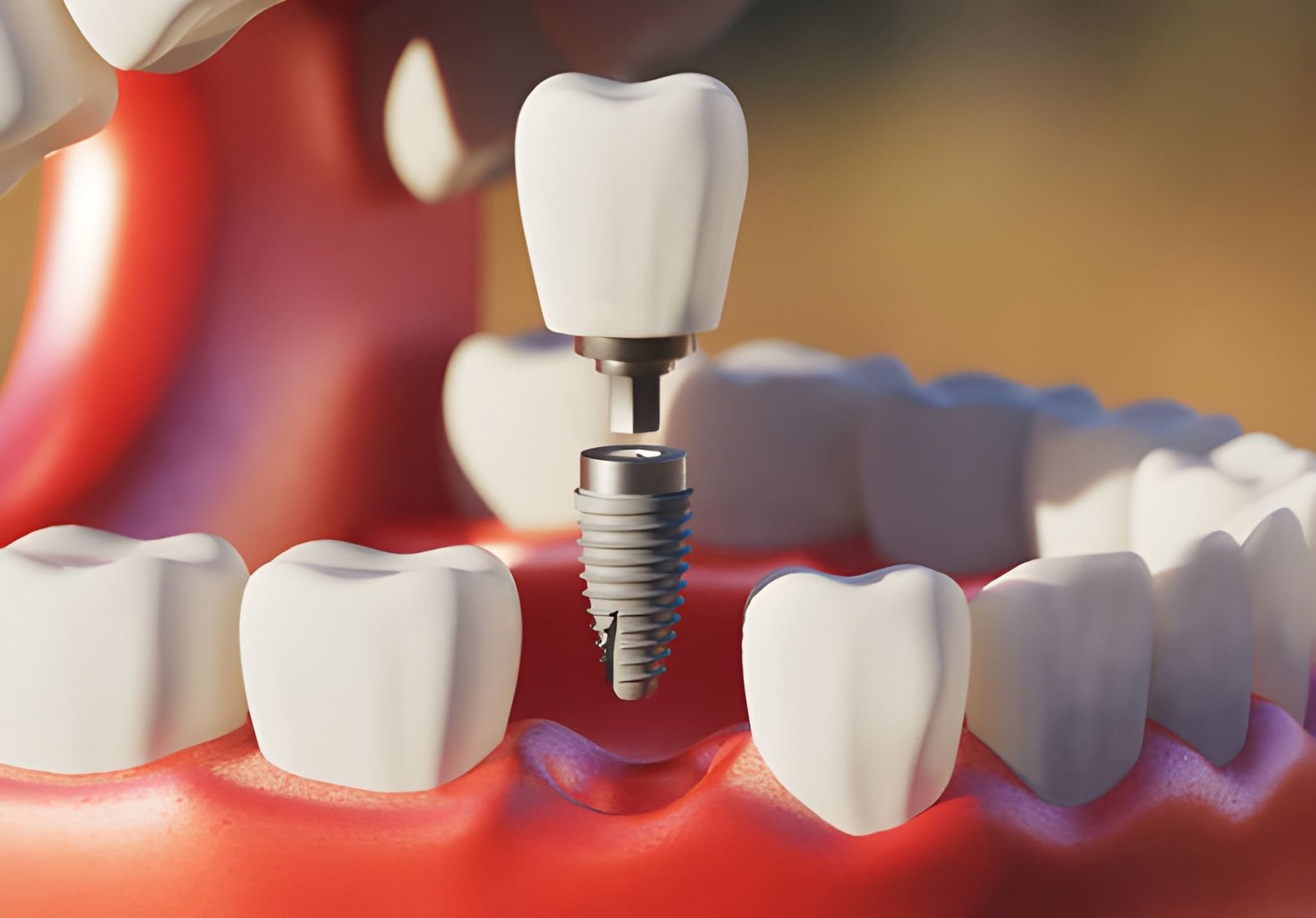
A dental implant is a small titanium post that is placed surgically into the jawbone, where it acts as an artificial tooth root. Over several weeks to months, the implant undergoes a process called osseointegration — the bone gradually fuses with the titanium surface, creating a stable, long-lasting foundation.
Once integrated, an implant crown, bridge, or implant-supported restoration is attached to the post. The result is a fixed, natural-looking tooth replacement that functions much like a real tooth.
Implants can replace a single missing tooth, several teeth, or support a full arch restoration. For patients who currently wear full dentures, implant-supported dentures (sometimes called overdentures) offer a middle-ground option — using two or more implants to anchor the denture firmly in place rather than relying on suction alone.
Implant surgery is typically carried out under local anaesthetic and is well-tolerated by the majority of healthy adults.
Dental Implants vs Dentures: Key Differences
Stability and Security
This is where the two options differ most noticeably in everyday life.
Dentures rely on fit and suction — or adhesive — to stay in place. As the months and years pass, the jawbone naturally changes shape following tooth loss, which means dentures can become progressively looser. Many patients find themselves reapplying adhesive multiple times per day, particularly with lower dentures.
Dental implants are fixed. They don’t move during eating, speaking, or laughing. There’s no adhesive involved. Because the implant integrates directly with the bone, it provides a level of stability that removable prosthetics simply cannot replicate.
Chewing Function and Diet
People with well-fitting dentures can eat most foods comfortably — but there are limitations. Harder or chewier foods can dislodge a denture or cause discomfort along the gum line. Many denture wearers quietly adjust their diet over time, avoiding certain foods without consciously realising they’re doing it.
Implants restore chewing function to something much closer to that of natural teeth. Patients can typically eat a wider variety of foods — including harder fruit, crusty bread, and steak — without worrying about stability. This has a meaningful impact not just on the enjoyment of food, but on nutritional intake.
Appearance and Natural Feel
Modern dentures are made to look natural, and a well-crafted set can be very convincing. However, dentures sit on top of the gum rather than integrating with the bone, which means that over time, as bone volume reduces, the appearance of the lower face can begin to change — a sunken or aged look around the mouth that’s difficult to correct without addressing the underlying bone loss.
Implants preserve the natural contours of the face by stimulating the jawbone in the same way a real tooth root does. They also feel more natural to the patient — there’s no foreign object resting on the palate, and no sense of something sitting in the mouth that wasn’t there before.
Speech
Loose dentures are a common cause of speech difficulties. The “clicking” sound associated with dentures, or the careful way some denture wearers speak to prevent movement, is something many patients find deeply self-conscious.
Because implants are fixed in the bone, they don’t interfere with normal speech patterns. Most patients report that their speech feels entirely natural after a short adjustment period.
Maintenance and Daily Care
Dentures require removal for cleaning — ideally after meals and certainly before sleep. They should be soaked overnight in water or a cleaning solution to maintain their shape. This routine, while manageable, is a permanent part of daily life.
Implants are cared for exactly like natural teeth: brushing twice daily, flossing, and attending regular dental reviews. There’s no removal, no soaking, no adhesive to manage. Implant-supported restorations do require attention around the gum line, and your dental team will guide you on the most effective technique.
Everyday Life: What the Difference Actually Feels Like
The clinical comparison is one thing. The lived experience is another.
Patients who have transitioned from conventional dentures to implants often describe the change as transformative — not just in terms of function, but in confidence. The ability to eat in a restaurant without anxiety, to laugh freely, to speak without self-editing. These aren’t trivial things.
That said, implants are not right for everyone, and it’s important to be honest about that. Surgery is involved. The treatment takes time. The upfront cost is higher. And some patients — particularly those who are comfortable with their dentures and managing well — may have no compelling reason to change.
Cost Comparison: Upfront vs Long-Term
Dentures are considerably less expensive at the outset. In Scotland, NHS dentures are available at a subsidised cost, and private dentures are significantly cheaper than implants as an upfront investment.
Dental implants represent a larger initial financial commitment. Each implant and crown involves a surgical procedure, imaging such as a CBCT scan, the implant post, abutment, and crown — each of which carries its own cost.
Where the picture becomes more nuanced is over the long term. Dentures typically need relining, adjusting, or replacing every five to ten years as the mouth changes shape. Adhesives, cleaning products, and replacement costs accumulate over decades. Implants, by contrast, are designed to last for many years — potentially a lifetime with proper care. The long-term cost difference is therefore less dramatic than it first appears.
It’s also worth factoring in quality of life. For patients who are struggling significantly with denture instability, the impact on wellbeing, diet, and confidence has real value that doesn’t appear in a cost comparison table.
Bone Health: A Consideration That’s Often Overlooked
When a natural tooth is lost, the jawbone in that area no longer receives stimulation from chewing. Without that stimulus, the bone gradually resorbs — it reduces in volume over time. This is why long-term denture wearers often experience changes in facial appearance, and why dentures require relining as the fit changes.
Dental implants are the only tooth replacement option that directly addresses bone loss. Because the titanium post integrates with the bone and transmits chewing forces in a similar way to a natural root, the bone is stimulated and preserved. This has both functional and aesthetic benefits over time.
This is one of the most clinically important distinctions between the two options — and one that’s worth discussing in detail during any implant consultation.
Which Option Lasts Longer?
Dentures are designed for regular replacement. On average, a set of dentures will need relining or replacing every five to eight years, depending on how much the underlying bone has changed and how well the dentures have been maintained.
Dental implants, when placed in a healthy patient with sufficient bone and maintained with good oral hygiene, can last for decades. The implant post itself has a very high long-term survival rate in clinical literature. The crown or overlying restoration may need replacement after ten to fifteen years, much like a natural tooth that’s had significant dental work.
When Are Dentures Still the Right Choice?
Dentures remain appropriate — and sometimes the best option — in a number of situations:
- Patients who are not medically suitable for implant surgery (certain systemic conditions or medications require careful consideration)
- Patients who cannot commit to the healing period required for osseointegration
- Patients for whom cost is a significant barrier and who are managing comfortably with their current denture
- Patients with insufficient bone volume who are not suitable candidates for bone grafting
- Patients who simply prefer a non-surgical approach and are satisfied with the result
There’s no single right answer. An experienced dental team will help you understand which option suits your individual circumstances.
Who Is a Good Candidate for Dental Implants?
Most healthy adults with missing teeth are potential candidates for dental implants. The key requirements are:
- Adequate jawbone volume to support the implant post (assessed via CBCT scan)
- Good general health — certain conditions, such as uncontrolled diabetes or active periodontal disease, need to be managed before treatment begins
- Non-smoking, or a willingness to stop around the time of surgery, smoking significantly affects healing and implant survival rates
- Commitment to long-term oral hygiene and regular dental reviews
If bone volume is insufficient, bone grafting procedures can sometimes be carried out to build up the site before implant placement. This adds time and cost, but opens up the option to patients who might otherwise not be suitable.
Can You Replace Dentures with Dental Implants?
Yes — and this is one of the most common conversations dental teams have with existing denture wearers.
If you currently wear full dentures and are struggling with stability, implant-supported dentures (overdentures) can be an excellent transition option. Rather than replacing the denture entirely with a fixed bridge, two or more implants are placed in the jaw and the existing denture — or a new one — clips securely onto them. The result is a denture that doesn’t move, doesn’t require adhesive, and is still removed for cleaning.
For patients who want a fully fixed solution, a full-arch implant restoration using four or more implants can provide a completely permanent result.
The transition from conventional dentures to implant-supported restoration is straightforward in principle, though it does require a thorough assessment of bone volume, general health, and treatment goals.
Frequently Asked Questions
Are dental implants painful?
The surgery is carried out under local anaesthetic, and most patients report that the procedure is more comfortable than they anticipated. There is typically some soreness in the days following surgery, which is managed with over-the-counter pain relief.
How long does implant treatment take?
From the initial consultation to the fitting of the final restoration, the full process commonly takes between three and six months — sometimes longer if bone grafting is required. The healing phase after implant placement allows osseointegration to occur before loading.
Can I get implants on the NHS in Scotland?
NHS dental implants are available only in limited circumstances in Scotland. Most patients pursue implant treatment privately. Your dental team can explain the options available to you.
What are implant-supported dentures?
Implant-supported dentures (also called overdentures) are removable dentures that attach securely to implants in the jaw. They provide significantly better stability than conventional dentures and are often recommended as a stepping stone for existing denture wearers.
Do implants look natural?
Yes. Implant crowns and restorations are designed to match the colour, shape, and translucency of natural teeth. Most people find the result indistinguishable from their own teeth.
How do I know if I have enough bone for implants?
A CBCT scan — a three-dimensional X-ray of the jaw — is used to assess bone volume and quality before implant planning begins. This is a routine part of any implant consultation and gives your dental team a precise picture of the available site.
Book Your Consultation in Lanark
If you’re weighing up dental implants versus dentures — or you’re an existing denture wearer wondering whether implants could improve your quality of life — the most useful next step is a proper clinical assessment.
At Waterloo Dental Practice in Lanark, we work with patients from across South Lanarkshire, Glasgow, and Edinburgh who are exploring their tooth replacement options. We offer thorough denture assessments, detailed implant consultations, in-house CBCT scanning, and full tooth replacement planning. Whether you’re considering a single implant, implant-supported dentures, or a more comprehensive restoration, we’ll take the time to explain what’s realistic for your situation — clearly and honestly, without pressure.